
You have moved out, returned the keys and completed the handover — but your security deposit has not arrived yet.
So how long can the landlord keep it?
In Singapore, there is no universal 7-day, 14-day or 30-day statutory deadline that applies to every residential tenancy.
The starting point is your Tenancy Agreement (TA).
When Should the Security Deposit Be Returned?
The CEA recommended tenancy agreement template provides for the security deposit, or the remaining balance after permitted deductions, to be refunded when the tenancy expires or is terminated.
However, CEA's template is a guide rather than a compulsory contract.
Your own TA may specify a timeframe for completing the final inspection, resolving deductions and returning the remaining deposit.
Check the wording instead of assuming a particular number of days automatically applies.
Can the Landlord Make Deductions?
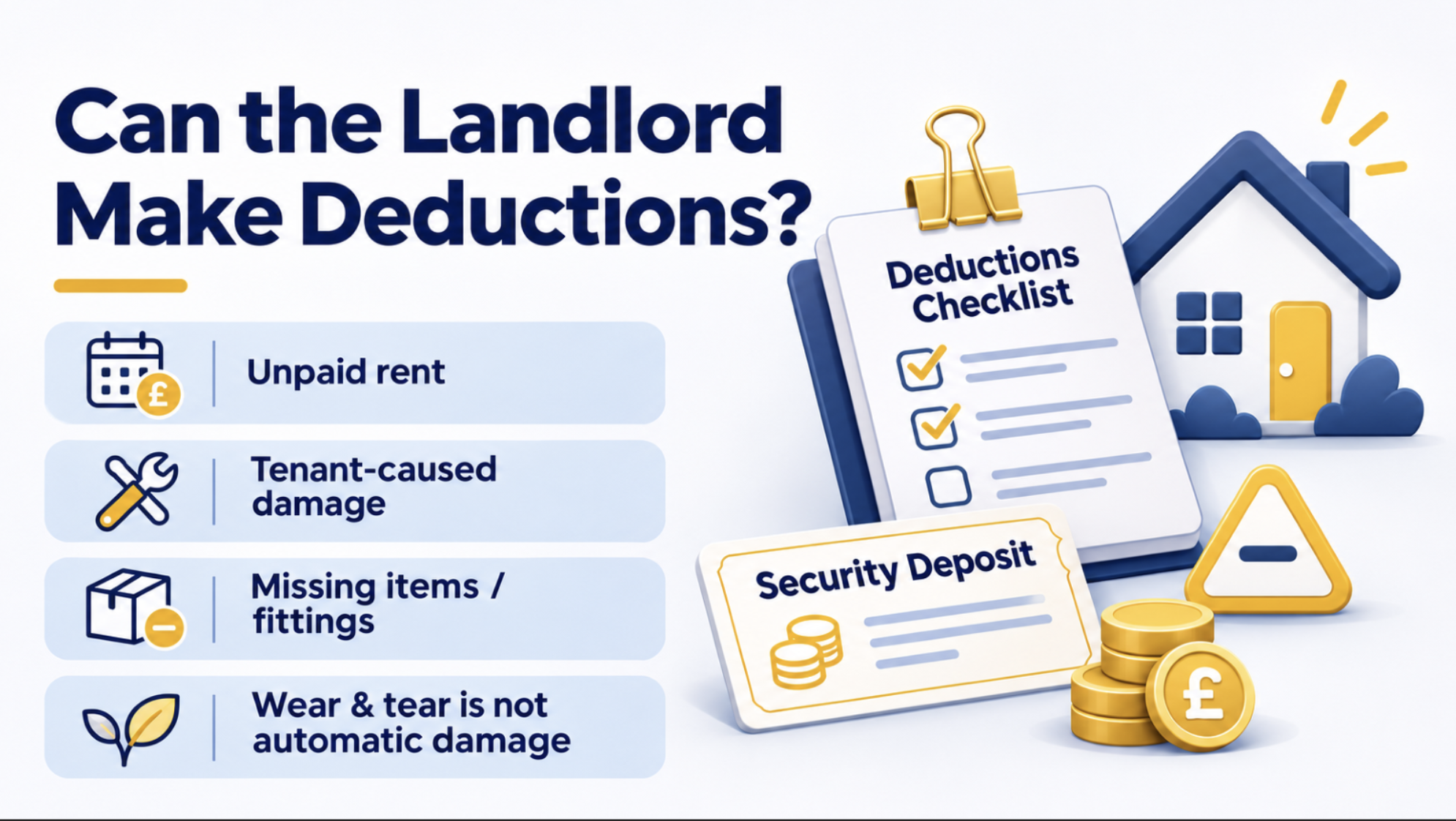
Potentially, yes — but deductions should relate to obligations under the TA.
Examples may include:
- Unpaid rent
- Tenant-caused damage
- Missing furniture or fittings
- Outstanding amounts the tenant was responsible for
- Other breaches covered by the agreement
CEA's recommended template allows reasonable deductions to remedy a breach, subject to its notice-and-remedy process.
However, fair wear and tear should not automatically be treated as tenant-caused damage.
Why the Final Handover Matters
Before moving out, compare the property with the original:
Inventory list
Condition report
Move-in photos or videos
Take another set of dated photographs at handover and record the return of keys, access cards and other items.
These records can help if a dispute later arises over damage or missing items.
Can You Use the Deposit as Your Last Month's Rent?
Do not assume so.
CEA's recommended tenancy template provides that the security deposit should not be used by the tenant to offset rent.
Unless the landlord expressly agrees otherwise, continue paying rent according to the TA and deal with the deposit separately.
What If the Deposit Is Being Withheld?
Ask the landlord in writing for:
The amount being withheld
The reason for each deduction
Supporting invoices or evidence where relevant
When the remaining balance will be returned
If you cannot resolve the dispute, mediation or legal action may be possible depending on the circumstances.
Can You Bring a Deposit Dispute to the Small Claims Tribunals?
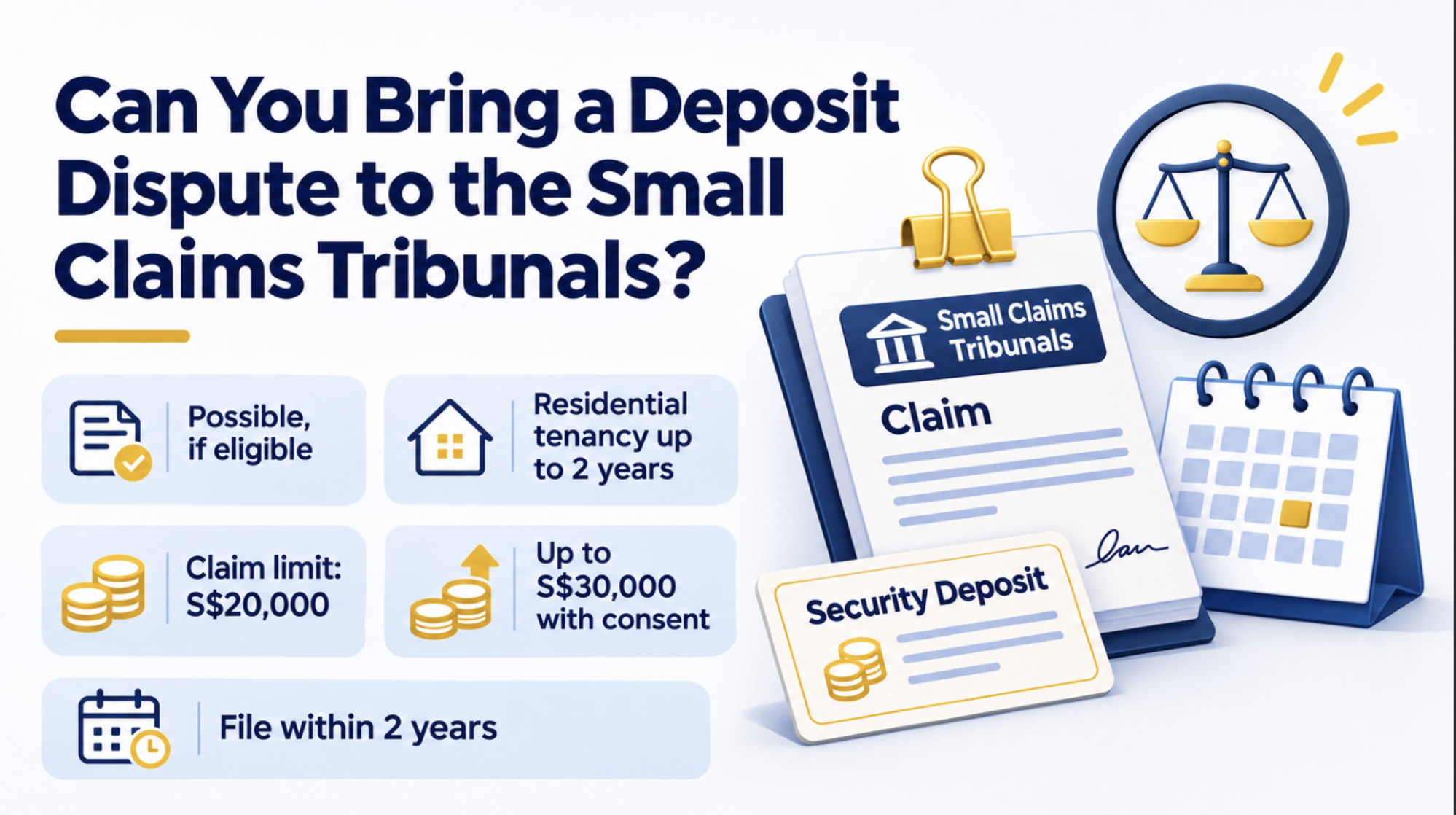
Potentially — but eligibility limits apply.
According to the Singapore Courts, the Small Claims Tribunals (SCT) can hear qualifying disputes involving residential tenancy agreements not exceeding two years.
The normal claim limit is S$20,000, which can be increased to S$30,000 if both parties sign a Memorandum of Consent.
SCT claims must also generally be filed within two years of the event giving rise to the claim.
If your tenancy or claim falls outside the SCT's jurisdiction, you may need to consider other civil court processes or seek legal advice on the appropriate route.
CEA itself generally does not decide private landlord-tenant deposit disputes unless the issue concerns conduct by a licensed property agent or agency.
The Bottom Line
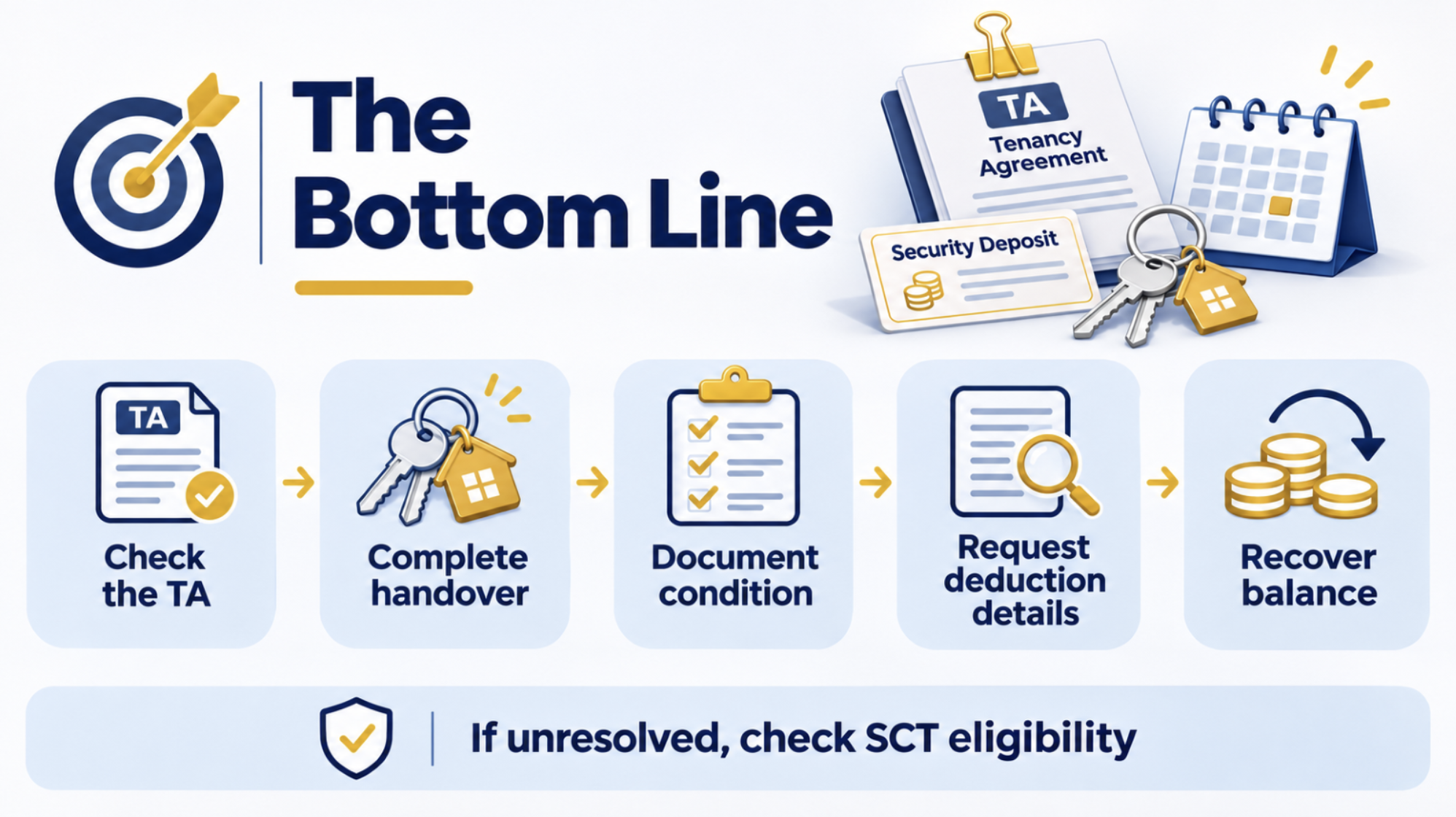
There is no single statutory deposit-return deadline for every Singapore tenancy.
Instead:
Check the TA → complete the handover → document the property's condition → request details of deductions → recover the remaining deposit
If a dispute cannot be resolved, check whether your claim meets the Small Claims Tribunals' eligibility requirements before deciding on the next step.
Disclaimer: Rental and legal information in this article is accurate as of 16 November 2026 and is intended for general information only. Security deposit rights and dispute-resolution options depend on the individual Tenancy Agreement and circumstances of the claim. Refer to the latest CEA rental guidance and Singapore Courts' SCT guidance where relevant.
Share this article


